
Proxmox VM Provisioning Pipeline
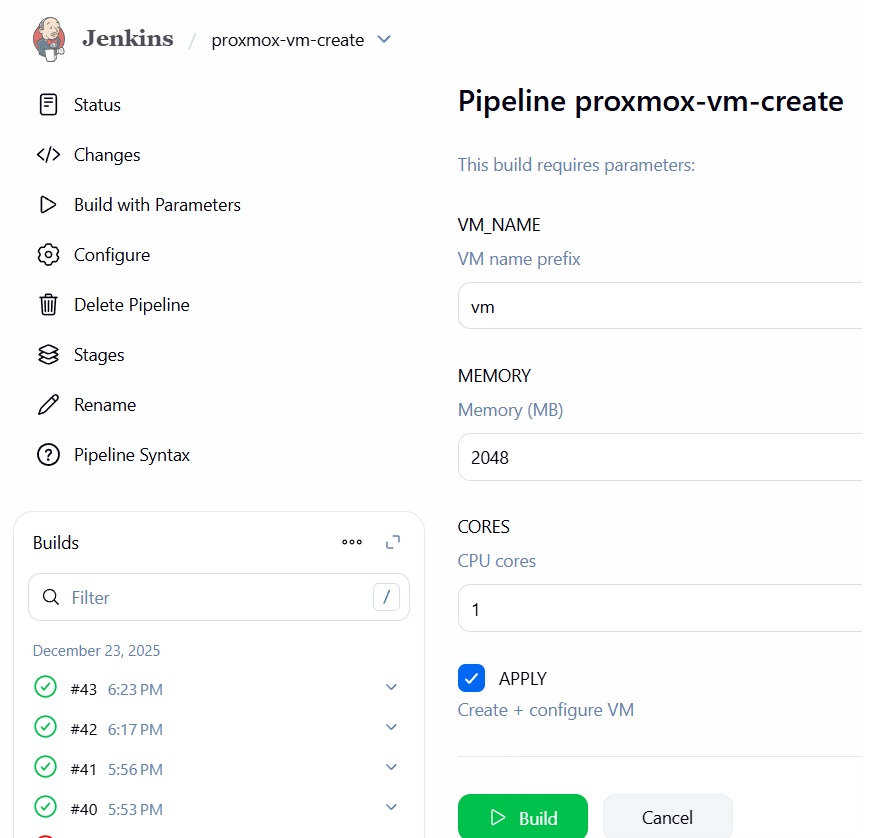
Proxmox VM Provisioning Pipeline with Jenkins (Infrastructure CI/CD)
I built an end-to-end infrastructure automation pipeline that provisions, secures, configures, and monitors virtual machines on Proxmox VE using modern DevOps tooling and real-world CI/CD patterns.
This project replaces a traditional “app-only” pipeline with full infrastructure lifecycle automation — from VM creation to secure access and observability — driven entirely by code.
Tech Stack
- Terraform - Infrastructure as Code for VM provisioning on Proxmox VE
- Jenkins - CI/CD orchestration and pipeline execution
- Ansible - Post-provisioning configuration management
- HashiCorp Vault - Short-lived SSH certificate authentication
- Prometheus = Automated monitoring and metrics collection
What the Pipeline Does
Jenkins Pipeline
- Triggers infrastructure builds on demand
- Accepts parameters such as VM name, CPU, and memory
- Orchestrates Terraform and Ansible stages
- Injects credentials securely using Jenkins Credentials
- Ensures no secrets are stored in Git
Terraform (Infrastructure as Code)
- Provisions virtual machines on Proxmox using API tokens
- Deploys from cloud-init enabled templates
- Configures CPU, memory, and networking
- Injects SSH access via cloud-init
- Uses least-privilege API credentials
- Marks sensitive values appropriately
Ansible Configuration
- Applies baseline OS configuration
- Installs Docker and Node Exporter
- Requests Vault-signed SSH certificates
- Configures SSH to use certificate-based authentication
- Ensures consistent and repeatable VM configuration
- Vault acts as an SSH CA
- Eliminates long-lived static SSH keys
- Issues short-lived certificates via AppRole
- Improves security and access auditing
- Designed for automated, ephemeral infrastructure
Prometheus Integration
- Automatically registers new VMs as scrape targets
- Uses file-based service discovery for clean updates
- Avoids manual Prometheus configuration changes
- Ensures new infrastructure is monitored immediately
Architecture Flow
Jenkins Pipeline → Terraform provisions VM via Proxmox API → VM boots via cloud-init → Ansible configures OS and services → Vault signs short-lived SSH certificates → Prometheus begins scraping metrics
Security Model
- No secrets committed to GitHub
- Jenkins Credentials manage sensitive values
- Terraform variables marked as sensitive
- Vault must already be unsealed or auto-unsealed
- SSH access uses short-lived certificates instead of keys
- .gitignore prevents state files and secrets from leaking
Why This Project Matters
This pipeline mirrors real-world infrastructure workflows used in production DevOps and platform engineering environments:
- Infrastructure treated as code
- CI/CD applied to servers, not just applications
- Secure, auditable access using certificate-based SSH
- Automated observability baked into provisioning
- Designed to scale across many VMs and environments
It demonstrates the transition from manual VM management to fully automated, repeatable infrastructure delivery.
Repository GitHub: https://github.com/mikecozier/proxmox-terraform-ansible-jenkins-create-vm